The secret to making AI-generated models look real? Imperfection

Key takeaways
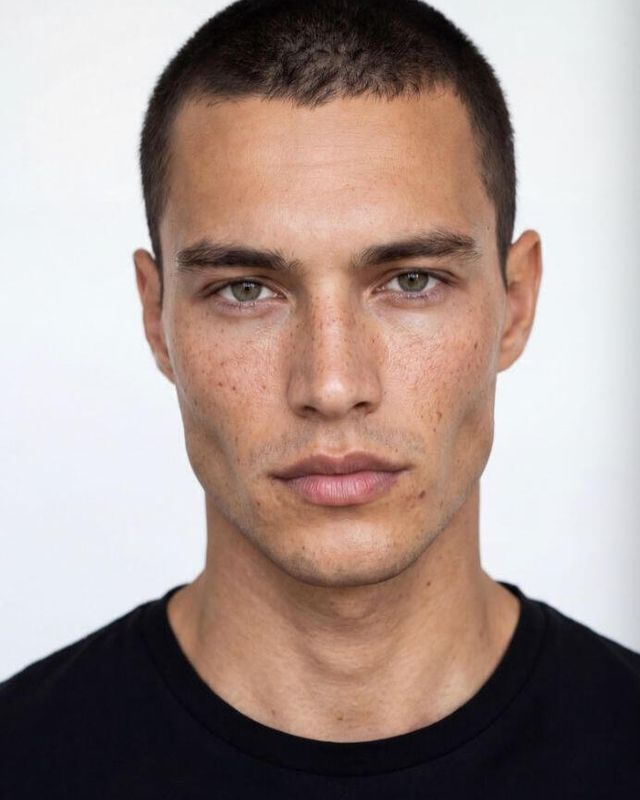
As AI gets better at rendering skin texture, flawless perfection is what gives a generated face away. LOOM prompts for specific imperfections, such as an uneven brow or a natural hairline, and composites in fine surface detail, so the result reads as human rather than generated.
We've generated a lot of different AI models for commercial campaigns, and we kept noticing the same thing. The better AI gets at skin texture generation, the more obvious it becomes that perfection is what gives AI away.
Real faces aren't clean. There's a tear trough under one eye, a mouth that sits a little forward, a lower nose bridge, a hairline receding at one corner, a hollow at the temple, eyes set a touch wide. Pick any face you actually find compelling and you'll find three or four of these on it.
So when we generate models at LOOM Studio, we add the flaws back in. Whether you're building products, brands, or images, the imperfections aren't bugs. They're what makes a face read as human.
In practice, this means prompting for specific asymmetries rather than leaving the model to default to symmetry. A slightly uneven brow, one eye marginally deeper set than the other, a natural hairline with a subtle widow's peak or recession. We also composite in fine surface detail like pores, faint lines, and the natural colour variation across skin that AI tends to smooth out unless you push back against it. The result is a face the viewer's brain doesn't flag as wrong, even if they can't articulate why.